


Insight

Human Capital - A Question of Value
"In financing growing companies, I always looked for human value that didn't appear on the balance sheet - the quality of management, especially its entrepreneurial drive. Once they were given access to capital, they built businesses that became amazing engines of job creation and wealth."

Small Companies, Create Jobs
"One of the most-common misconceptions about our private enterprise system is that large companies, such as the Fortune 500, are integral to the process of job creation in this country. The truth is quite the opposite."- Mike Milken

Let's Change The World
"It's always a handful of people who change the world. Get too many people involved and it doesn't work." - Mike Milken

Education
"An education leader once said, 'If you think education is expensive, try ignorance.' I would paraphrase that as, 'If you think cancer research is expensive, try paying for continued treatment of 100 million Americans.'" - Mike Milken
Capital Formation
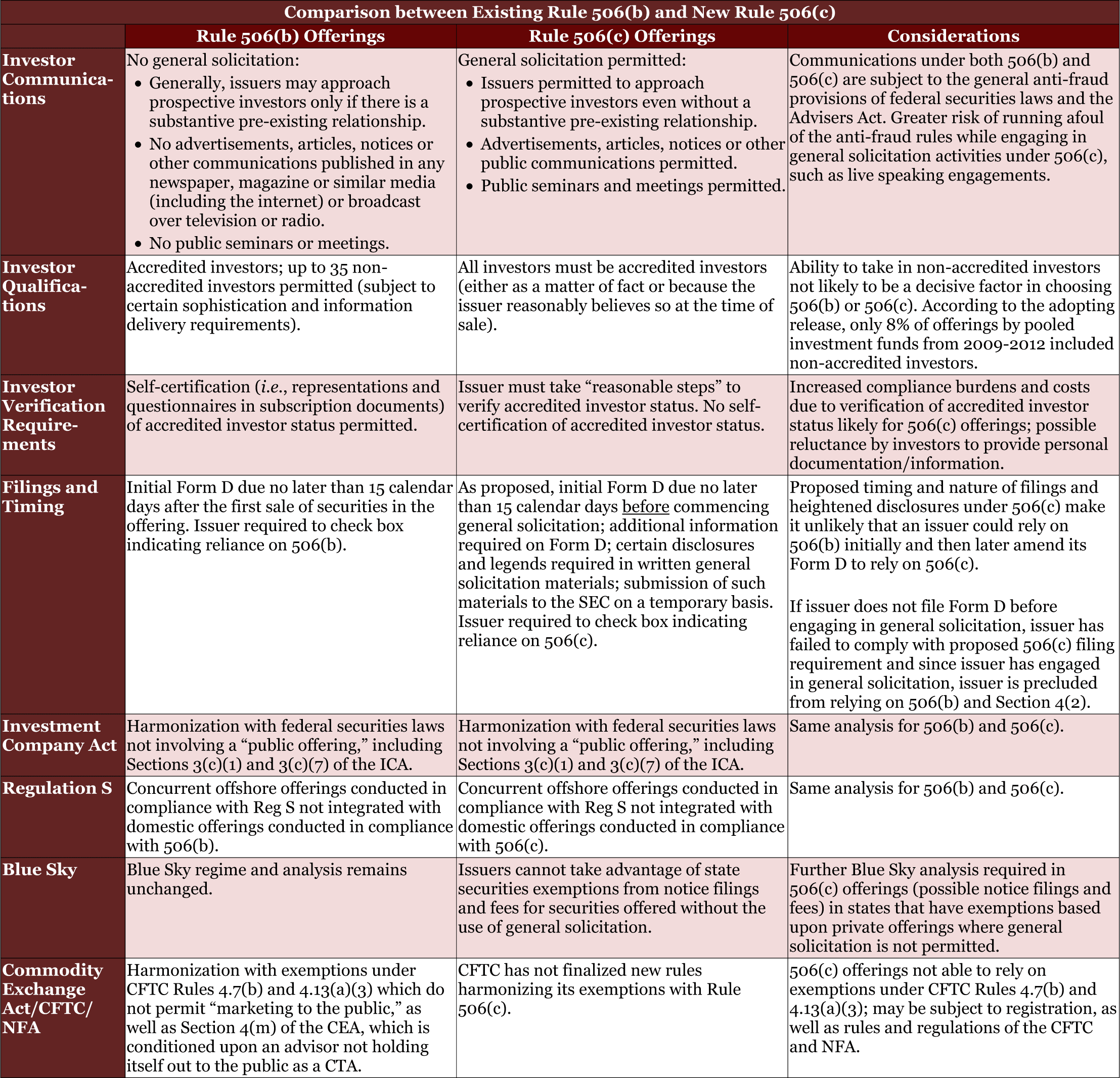
Standing alone, what the JOBS Act brings to the table is interesting. When leveraged by what Digital Marketing brings to the table is when the full benefit of the new rules and regulations can be realized.
Leveraging changes in the regulations governing capital formation with the speed, reach, and accuracy of Digital Marketing, a company can own and manage every aspect of its capital formation project and obtain the same type of results typically only seen in a fully marketed registered offering by a larger broker-dealer or investment bank. In one sense, a company’s finance and capital functions are essentially a business that, not unlike marketing and sales that supports the core of the company, is a key function and should be managed. of the core part of the company. And they need to treat capital formation as a company would treat any other part of the core functions of a company.
Whether you want to lead or only want to understand, you do want to make sure what is done today does not prejudice the future and that you attract the kind of investor that is best-fit for every stage of your company’s growth. Gainey Capital can guide or lead your Capital Formation project. We also market our own equity offerings as rules permit often participating in our client’s offering.
Capital Formation
An entire section of the SEC’s website is dedicated as a resource for young companies to help them navigate the Rules and Regulations of Capital Formation. Traditionally, the SEC’s job has been to protect the investor. With greater transparency, that job is changing as there are less and less places for the bad guys to hide. Today, we see the SEC becoming more of a promoter of how early stage companies can access the capital they need to grow. In fact, as you learn more about capital formation you will learn more about The JOBS Act of 2012 and how the changes that have originated from that legislation are fueling a wholesale change in how young companies are getting funded. Core Competancie. The changes in market behavior brought about by the JOBS Act is fundamental to promoting market activity and it is that activity that attracts investor interest. Digital Marketing is a critical success factor in capital formation. It enables targeting, search, acquisition, and management of investors that are best-fit for each stage of growth. Through workflow, we create unique client-investor experiences in scale to build and maintain close, “sticky” relationships with investors regardless of where they are in the world.

Build Awareness Among Investors |
AI can refine SEO and its results. It is this type of technology. |
Build Awareness Use White Letters Over Dark Shade |
General Awareness Campaign. Ongoing. |
Build Awareness White Letters over Blue Shaded Image |
Build Awareness Among Investors |
Build Awareness Among Investors |
Build Awareness Among Investors |
Build Awareness Among Investors |
Build Awareness Among Investors |
Build Awareness Among Investors |
Build Awareness Among Investors |
Build Awareness Among Investors |
Build Awareness Among Investors |
Build Awareness Among Investors |
Build Awareness Among Investors |
Build Awareness Among Investors |
Build Awareness Among Investors |
Capital formation is a challenging process and a successful raise is not measured only in terms of dollars-in, it is measured in terms of what value is ultimately created and if the milestones of the capital formation process were in fact achieved. The source of the capital raised is also a consideration to ensure that there are no unintended obligation created sources is a reputable sources with noFor a significant capital formation project the company will need to invest in marketing – either building an internal team, out-sourcing, or a combination of both. Nothing short of a Tier-1 marketing effort is expected. While the rules and regulatory changes impact capital formation, in order to successfully raise capital the company needs additional skills. The biggest one is marketing. Marketing is a large topic and the commitment a company needs to make to proper marketing is significant. This is where almost all companies fail. Marketing is typically found at the intersection of innovation and its user. So while there is a lot of marketing around features and benefits of the value proposition – a company must also market to its investors, shareholders, market influencers, prospective new employees, and communities that the company will impact, etc. The most difficult part of this already complex process is to use digital tools to segment the investor market and identify those investors we want to approach and then build an awareness campaign to accomplish that. This same process will also point the marketer to the places in the markets where the identified personas of the target investors participate and thus those segments become target segments. It can be done. However, the commitment is large which means that the reward for achieving this objective must be commensurately large as well. The companies with the greatest success in capital formation are the ones that frame themselves as having strong skills in marketing. A company needs to be able to identify, target, and the type of investors it needs for every stage of growth, and be able to target them and using digital tools reach out and build relationships and ultimately convert prospective investors to investors.
The JOBS Act
The JOBS Act of 2012 directed Congress to ease the rules and restrictions on capital formation for emerging growth companies. With a less complicated path to funding, early stage companies could secure the capital they need to grow with a significant portion going to hire people. Creating jobs. Don’t be fooled – while the rules and regulation changes enable capital formation, in order to successfully raise capital the company needs additional skills. The biggest one is marketing. That includes general marketing – functional and creative. It also includes Investor Relations marketing which has its own unique brand and jargon. And then there is the targeting of types of investors where personas are developed that profiles those investors and tells a marketing where that particular personal are having their conversations in the market.
Marketing Occurs at the Intersection of Innovation and the Market Segment Targeted

|
The companies with the greatest success in capital formation are the ones that frame themselves as having strong skills in marketing. A company needs to be able to target the type of investors it needs for every stage of growth, and be able to go target them and using digital tools reach out and build relationships and ultimately convert prospective investors to investors.
| Post JOBS Act Capital Formation |

Legislation Eased Restrictions On Capital Formation |
The JOBS Act Directed Congress to Ease Restrictions in the Capital Formation Process for Emerging Growth Companies. |
Technology-Enabled Investor Relations Management |
Digital Marketing plays a pivotal role in targeting, attracting, and closing investors with greater accuracy, reach, and speed. |
Investors win too. Prior to these legislative changes, investors did not have the visibility and were not able invest in these early stage opportunities on the same basis as VC’s, Private Equity, HNW, and other established sources of capital.

Expertise in Digital Marketing
Whether supporting a marketing plan, capital formation, or IR, marketing is everywhere and with it comes the expectation that tier one execution is the norm.
Expertise in Capital Formation
Having spent decades raising capital in many forms and from many sources and geographic regions, privately, through funds, and using many type of firms hired to help with the process, we have a lot of experience and a flat-footed perspective on how it really works.
Leveraging Competencies
Leveraging capital formation with digital marketing gives Gainey Capital the ability to pursue business opportunities either as stand alone companies within our own portfolio, in partnership with strategic players, or through acquisition and investment to achieve specific objecives in attractive markets.
Innovation
We integrate Digital Marketing and Capital formation into every stage of Business Development. Each is supported by workflow and digital interconnection with other markets, businesses, executives, up and down the value chain, and geographically diverse markets to expand interest by and for client companies.
It has taken 10 years for legislation to fulfill what the JOBS Act of 2012 asked Congress to do – ease the rules and regulations on capital formation for emerging growth companies.
Easing the rules and regulations is just the first part. What is only implied in the new rules is that an understanding of the nuances and HOW to use the new rules needs to be brought to the table in order to have a successful raise. Broker-Dealers understand this and have the network of resources to help and vendors are emerging with services to bring otheresources to help as well. Unless your team has done this before may not be as easy as you originally hoped.
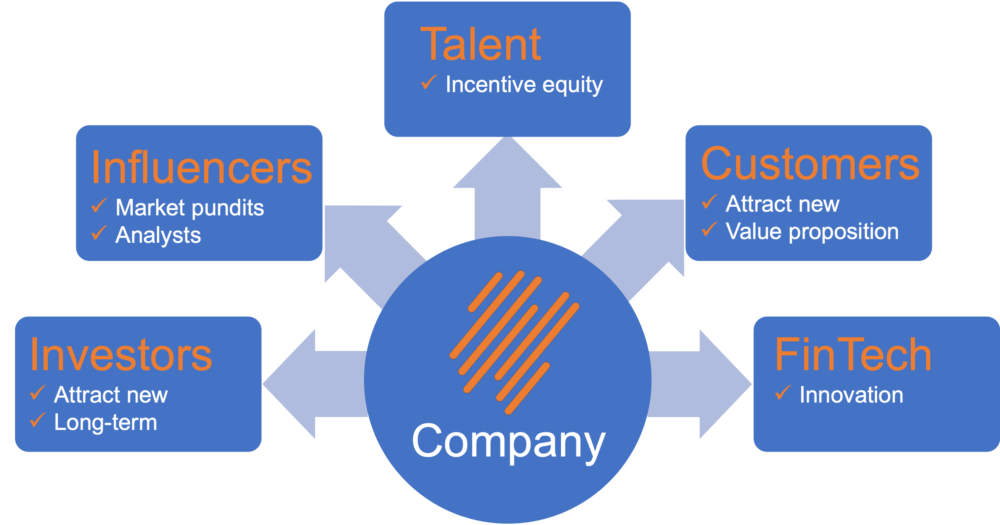
Every stage of growth will be carefully planned and architected to attract the best people, investors, customers, and partners alignment with the company’s needs and the ability to control our own destiny.
Gainey Capital can guide or manage your capital project so that your company owns every step and the investors are your company’s investors.
We are a marketing-driven management consulting firm for emerging growth companies. We specialize in capital formation.
Ten Reasons Why You Should Be Raising Capital Online Now:
| 1. | Face-to-face meetings are not required. |
| 2. | Set up is painless. |
| 3. | Makes it easier for investors to get to a “YES” decision. |
| 4. | Digitizes and automates investing in your business. |
| 5. | Empowers those who care most about you and your company to participate |
| 6. | Build brand loyalty |
| 7. | Involves your team in a key part of your business. |
| 8. | Integrates capital raising into operations. |
| 9. | Relieves Deal Tension |
| 10. | Take control of your destiny. |
Marketing is everywhere. Every function needs it and uses it.
Gainey Capital is:
| 1. | Management Consulting Specialists |
| 2. | Marketing Driven In Everything We do |
| 3. | Focussed on Emerging Growth Companies |
| 4. | Specializing in Capital Formation and Business Development |
| 5. | Leveraging Regulatory Changes From JOBS Act |
| 6. | Using the Speed, Reach, and Accuracy of Digital Marketing |
| 7. | Creating Capital Structures Best Suited for Growth |
HEADING 6
The JOBS Act directed congress to legislate easing of restrictions on capital formation. This included sources of capital, marketing, advertising, and selling equity offerings for emerging growth companies.
HEADING 5
The JOBS Act directed congress to legislate easing of restrictions on capital formation. This included sources of capital, marketing, advertising, and selling equity offerings for emerging growth companies.
HEADING 4
The JOBS Act directed congress to legislate easing of restrictions on capital formation. This included sources of capital, marketing, advertising, and selling equity offerings for emerging growth companies.
HEADING 3
The JOBS Act directed congress to legislate easing of restrictions on capital formation. This included sources of capital, marketing, advertising, and selling equity offerings for emerging growth companies.
HEADING 2
The JOBS Act directed congress to legislate easing of restrictions on capital formation. This included sources of capital, marketing, advertising, and selling equity offerings for emerging growth companies.
HEADING 1
The JOBS Act directed congress to legislate easing of restrictions on capital formation. This included sources of capital, marketing, advertising, and selling equity offerings for emerging growth companies.
PARAGRAPH
The JOBS Act directed congress to legislate easing of restrictions on capital formation. This included sources of capital, marketing, advertising, and selling equity offerings for emerging growth companies.
Gainey Capital’s competencies are in Digital Marketing and Capital Formation. Our business focuses on two areas:
1) We build technology businesses in large complex markets such as Healthcare and the Internet of Things (IoT). We act either as management consultants for our clients, pursue startups, or acquire and invest for our own portfolio;
2) As management consultants we assist early stage companies in strategic planning and execution coupled with staged Capital Formation and Business Development – both are intimately linked.
We integrate Digital Marketing and Capital Formation into every stage of a company’s growth. Digital Marketing is core to both and enables targeting of users and investors that are best-fit for each stage of growth. Through workflow, we create unique client-investor experiences in scale to keep our relationships close and “sticky”. The latter being particularly important in the early stages to guide investor behavior to mimic that of a very closely held company thus managing liquidity as true liquidity grows as the market matures.
Changes to the rules and regulations in recent years designed to ease the restrictions for early stage and growth companies and thus increase activity in this area, combined with digital marketing that increases the speed, reach, and accuracy of messaging markets, provides emerging growth companies access to the capital they need.
This is essentially a new class of capital that companies, investment banks, and broker dealers have not had access to until now. A company can add the experience and know-how from investment banking and broker dealers and lead their own fundraising internally from private placements to a full on IPOs.
We integrate capital formation into every stage of a company’s growth. Relying on changes in the capital markets as a result of the JOBS Act, we use digital marketing to attract investors best-fit for each stage of growth.
– Gainey Capital
The most important part of your offering will be in how it is marketed. Gainey Capital is strong in marketing and knows its business better than anyone. Knowing the capital formation process enables us to be able to market the offering from the expert perspective of the business. Assuming that early investors will be drawn to an investor will be because they know the space and a see how our value proposition in the market is unique and how we will win. Being able to deliver that message to the market we create awareness, interest, and close financing as we are better suited than anyone to advocate for additional investors. The question is only whether our company or if you are running your own finance campaign your company has the skills to promote the offering.There are a lot of very good channels that could be used as alternatives or together. However, as mentioned before, a company only sell its first public shares once and those shares are what will quickly become the market and you want to make sure that those first shareholders don’t want to come and be the first ones in and first ones out as that will create a headwind that is difficult to overcome to get the share price up. Consideration must be given to what types of restrictions will be on these early shares and conversely, who will be the early sellers and who should be given the opportunity to be an early seller.
In the wake of the 2008 financial crisis, Congress created the Jumpstart Our Business Startups Act (JOBS Act) to encourage capital formation in order to grow businesses, create jobs and spur economic activity. Since its enactment in 2012, the JOBS Act has succeeded in increasing market activity by easing regulatory requirements for smaller companies going public as well as companies raising capital in the private markets.
The digital transformation of marketing enables more accurate targeting and faster, farther delivery of messages to targeted stakeholders ie customers, shareholders and stakeholders. Markets become more responsive and activity increases. When combined with the changes in the rules and regulations governing capital formation, emerging companies have access to capital formation opportunities previously only available through larger investment bankers and broker dealers networks.
We are a marketing-driven management consulting firm for emerging growth companies. We specialize in capital formation and business development.
We integrate capital formation into every stage of a company’s growth. Relying on changes in the capital markets as a result of the JOBS Act, we use digital marketing to attract investors best-fit for each stage of growth.
– Gainey Capital
What you need to know about the JOBS Act:
There is a lot of information about the JOBS Act readily accessible on the web. I have yet to see something that points out the not so accessible information that an executive must really understand before they jump in to this endeavor. There are two areas that are the most important: Capital Market Functions and Digital Marketing.
The Jumpstart Our Business Startups Act (JOBS Act) has fundamentally reshaped the landscape of capital formation in the United States, revolutionizing the ways in which startups and small businesses fund their businesses. Executives who have navigated this terrain of capital formation firsthand can attest to the substantial benefits brought about by these regulatory changes. Yet, those encountering this process for the first time may find themselves perplexed, pondering how it was possible for any company to secure funding prior to these reforms, let alone now. A fitting sports analogy could clarify this: Consider any professional sport—top athletes make it appear effortless. However, reaching such proficiency demands years of persistent effort and overcoming numerous challenges. Similarly, mastering the nuances of capital formation is akin to an athlete training to win a championship—both require understanding innumerable subtle details that separate the experts from novices. Why is this important? How the capitalization table is structured, the types of shareholders, if the company’s shares are listed, the number of shareholders, and the geographic proximity of the shareholders affect market behaviors. Do the shareholders have the ability to communicate with each other? These things matter from a standpoint of control of the company. Making sure you understand these dynamics and design the cap table to fit within the founders vision of how the company will be managed is important and it is a lot easier to get this right at the beginning vs trying change it all later on.
Provisions in the JOBS Act
Title I of the JOBS Act provides streamlined reduced disclosure rules for emerging growth companies, defined as US companies with annual gross revenue below one billion dollars per year.
Title II of the JOBS Act revolutionizes traditional boundaries by allowing companies to “generally solicit” or publicly advertise their offerings. This means businesses can now reach out directly to a broader audience through various digital channels, dramatically expanding their visibility and potential investor base beyond the customary private networks.
Title III goes a step further by democratizing investment opportunities through full-blown equity crowdfunding. This allows main street investors—essentially anyone from the general public—to participate in potentially lucrative startup and small business ventures. It’s a game-changer that opens up investment to those who were previously unable to participate due to net worth or income limitations, fostering a new culture of inclusive investment.
Lastly, Title IV introduces a more workable version of Regulation A, often referred to as Regulation A+. This provision simplifies the previously cumbersome requirements and raises the fund cap, making it feasible for companies to raise up to $50 million from the public. This not only provides startups and small businesses with a more robust framework for raising capital but also instills greater confidence among potential investors regarding the legitimacy and potential of these ventures.
Together, these elements of the JOBS Act create a more dynamic, accessible, and efficient environment for capital formation, aligning perfectly with modern digital marketing strategies to enhance outreach and investor engagement.
What is digital marketing?
Digital marketing is the practice of promoting products, services, or brands through digital channels, leveraging various online platforms to reach a targeted audience efficiently and effectively. It encompasses a wide spectrum of tactics and tools, including social media marketing, search engine optimization (SEO), email marketing, content marketing, and data analytics, among others. In the context of capital formation for startups and small businesses, digital marketing plays a pivotal role in attracting potential investors and creating a compelling narrative around a company’s value proposition. By strategically deploying digital marketing techniques, businesses can enhance their visibility, engage with key stakeholders, and build the credibility necessary to secure funding in today’s competitive landscape.
Highlights of recent changes to the JOBS Act include the ability for companies to “generally solicit” or publicly advertise their offerings (Title II); full blown equity crowdfunding to main street investors under Title III; and a new more workable version of Regulation A (Title IV).
The JOBS Act is a significant breakthrough in the field of capital formation, providing an array of new opportunities for startups and small businesses. Each title under this act brings unique advantages, specifically designed to ease and enhance the process of fundraising.
Capital Market Functions
What is digital marketing?
Digital marketing is the practice of promoting products, services, or brands through digital channels, leveraging various online platforms to reach a targeted audience efficiently and effectively. It encompasses a wide spectrum of tactics and tools, including social media marketing, search engine optimization (SEO), email marketing, content marketing, and data analytics, among others. In the context of capital formation for startups and small businesses, digital marketing plays a pivotal role in attracting potential investors and creating a compelling narrative around a company’s value proposition. By strategically deploying digital marketing techniques, businesses can enhance their visibility, engage with key stakeholders, and build the credibility necessary to secure funding in today’s competitive landscape.
Highlights of recent changes to the JOBS Act include the ability for companies to “generally solicit” or publicly advertise their offerings (Title II); full blown equity crowdfunding to main street investors under Title III; and a new more workable version of Regulation A (Title IV).
The JOBS Act is a significant breakthrough in the field of capital formation, providing an array of new opportunities for startups and small businesses. Each title under this act brings unique advantages, specifically designed to ease and enhance the process of fundraising.
Capital Formation as a Core Function
These regulatory modifications have simplified the process sufficiently to manage it internally, yet it still demands dedicated C-level attention to integrate it as a core function within the company’s operations. From the moment the company is started, ensuring the company is adequately funded with the right type and structure of capital for each stage in a company’s growth is important. The CEO must grasp this process thoroughly, and a C-level executive should be appointed to spearhead and maintain it alongside other critical departments like operations, finance, and HR. Usually it is the CEO and CFO. Grasping these finer details is crucial, distinguishing professional approaches from amateur attempts. Moreover, marketing prowess is indispensable in capital formation; lacking this, a company should not undertake its own fundraising endeavors. In fact, modern digital marketing is without a doubt a critical success factor.
Capital formation is highly dependent on the specific structure and dynamics within the markets companies are in. Whether it is healthcare or communications – every industry has its own structure and dynamics. Understanding those markets and how they work is a critical success factor in building a strategic investor base that will carry the company through its own growth stages not subject to artificial timing restrictions.
There have been significant changes to the rules and regulations in recent years designed to ease the restrictions for early stage and growth companies to access the capital they need. What is not apparent though is the knowledge required regarding the financial market functions needed to ensure a company accesses the right capital using the right structure for today and the future. Capital is as important an element as the operations or understanding the competitive market and value proposition and needs to be treated as such.
In the new era of capital formation enabled by changes in the rules and regulations, the largest gap to access to capital resides with the lack of knowledge and experience of management. Whether a company markets its own capital raise, leverages crowd funding portals like Net Capital and Start Engine, or is fortunate to have its own strong network of investors to draw from, the process of building and managing its investor base and presence in the investment community starts from day one and never ends. It is arguably one of the most important elements of a company and is an integral part of a company’s success and should be managed accordingly. Typically, this is another reason why in the early stages of a company the type of management required is very different from founders or established company growth execs. Gainey Capital can provide guidance to fill the funding knowledge gap in a company’s formative years and help build its internal competence to ensure its capital needs are met with the right kind of capital to ensure the company remains in control of it’s own future. Decisions made on capital structure and formation in a company’s early stages impacts the company’s ability to grow in later stages.
A company seeking capital that has an established digital presence with a management team of accomplished and recognized executives will gain greater traction and have greater success than a company no one has heard of. That means when company starts marketing itself it does so with the goals of not just business development in mind but a focus on the capital markets as well. A comprehensive marketing effort is required to ensure all these pieces are in sync and work together like a finely tuned machine. Further, the parts a company chooses to help will also depend on many factors beyond the industry it is in. Early investors in a company tend to act more like true partners. There is such a thing as mis-matched investors so ensuring the company has the right investors at the right time is critical. Patient investors who are not scared by inevitable delays or bumps in the road are needed early on and while large amounts of capital can flow from larger groups can be attractive this also can bring risk so making sure its investor base has diversity as well as a relatively broad ownership position helps mage that risk. The best risk management however comes from success so ensuring the capital is there and the company executes on what is promised time and again is critical.
At times investors need liquidity for reason not related to its investments. Liquidity goes hand in hand with execution however there are things an early stage company can do to help provide the liquidity. A public listing can provide that liquidity but at early stages this in fact is not true liquidity and can be a distraction for management. A “near” public company might be the answer. This means that a company can chose to behave more like a public company with transparency and disclosure that goes beyond what is typical of a private company. Be careful however as once the company sets a precedent for disclosure it can face negative publicity if it pulls back. If the company has made the decision to manage its market presence as a core function of the overall management of the company then it has the tools and processes in place already.
Since its enactment in 2012, the JOBS Act has succeeded in increasing capital market activity by easing regulatory requirements for smaller companies going public as well as companies raising capital in the private markets.
What is The Internet of Things?
From a simple application developed by students at Carnegie Melon University to save a student the trek across campus to see if a vending machine was out of Coke, the Internet of Things (IoT) market has grown to into a ubiquitous platform seen in almost every major market. From the industries that enable it to the service segments that adopt it, IoT is everywhere. It can enable services and drive efficiencies at unprecedented levels delivering a major global economic impact.
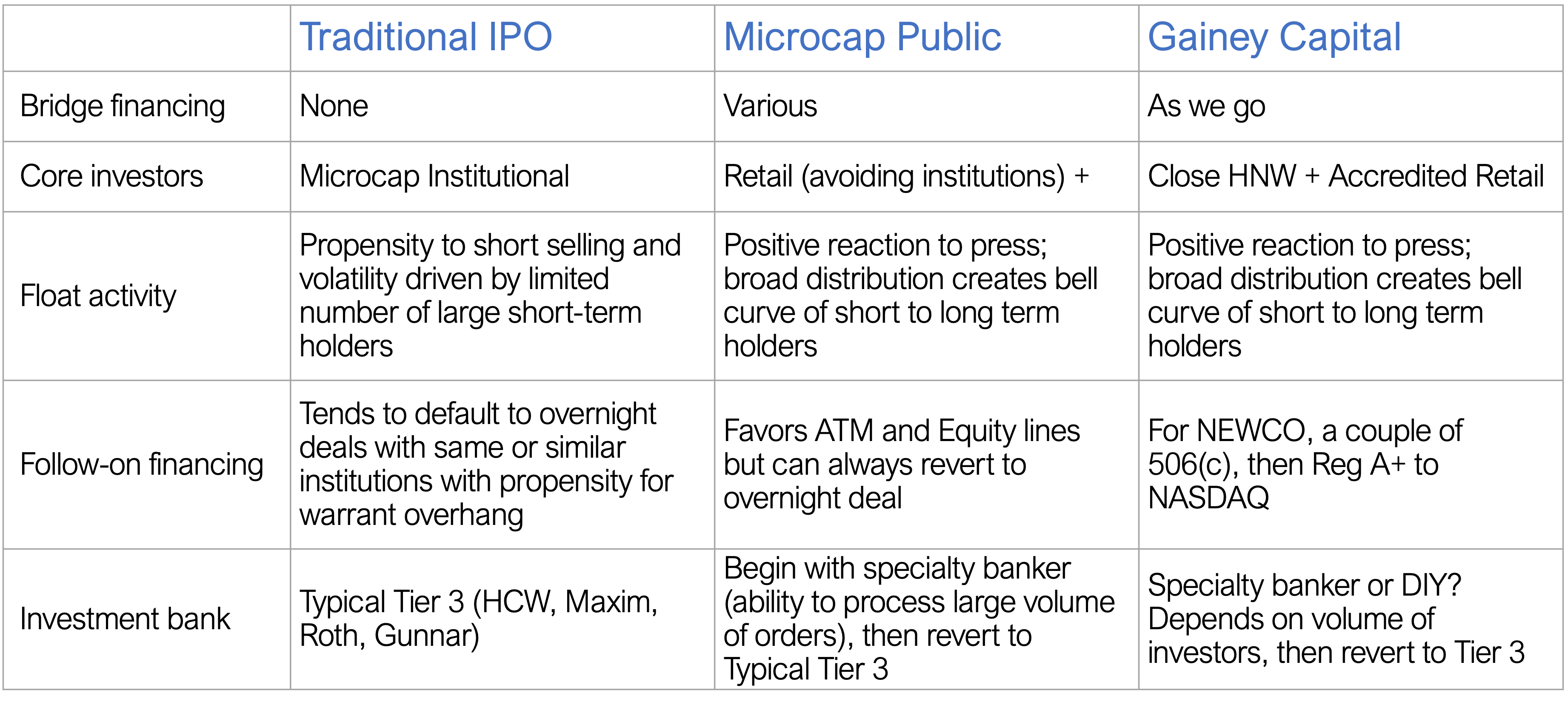
Registered or Exempt Offering?
Why?
What exemption will the company rely on?

Business Dev
Create Awareness

Target Persons of Investors
Best-Fit
Important to find best-fit investors for this stage in the growth of the company.